The most successful groomsmen suit colour combinations have something in common: they look considered without making every member of the wedding party look identical. A navy suit beside sage flowers, for example, can feel connected to the setting without copying the bridesmaids’ dresses. The trick is to choose one dependable suit colour, then repeat selected shades through ties, buttonholes or pocket squares.
Choose a base colour before matching the details
Start with the largest area of colour in the photographs: the suits themselves. Navy, mid-grey, charcoal and stone are flexible starting points because they accommodate different accents. Green and brown can be equally effective, especially for countryside celebrations, but fabric texture and the surrounding palette matter more.
A useful rule is to give the wedding party colour palette three roles: a main suit shade, a lighter neutral for shirts and an accent appearing in accessories or flowers. This keeps the group cohesive without insisting that the ties, bouquets and decorations are all precisely the same tone.
Groomsmen suit colour combinations worth considering
Navy suits with sage green and ivory
Navy and sage are a balanced choice for spring or summer weddings, particularly in gardens or country houses. Navy gives the outfits definition, while muted green brings in the natural surroundings. Use white or ivory shirts, sage ties and simple cream buttonholes. Brown shoes can soften the overall effect; dark brown generally looks more polished than very pale tan.
Charcoal suits with burgundy and soft pink
For an autumn ceremony or a formal hotel reception, charcoal is a reliable foundation. Burgundy ties add richness, while pale pink flowers or pocket squares keep the combination from feeling too heavy. White shirts and black shoes provide a crisp finish.
Mid-grey suits with dusty blue and white
Mid-grey is an approachable choice for daytime weddings. Pair it with dusty blue ties, white shirts and understated silver-toned accessories for a light, calm look. The pairing works particularly well against pale stone buildings and bright summer settings.
Stone suits with terracotta and cream
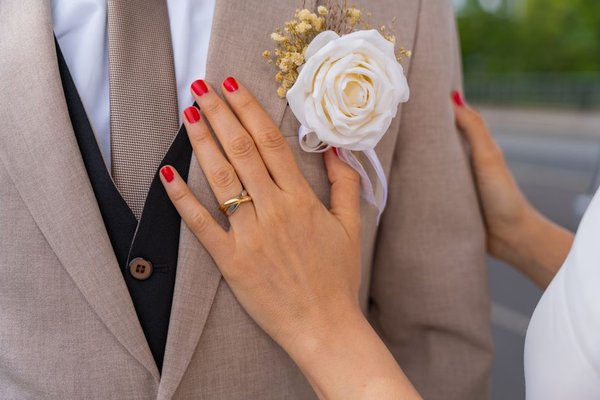
Stone or light taupe suits complement terracotta, rust and dried-flower arrangements without turning the outfits into a costume. This combination suits relaxed barn weddings and late-summer celebrations. Cream shirts or white shirts both work, depending on how warm the fabric appears.
Keep shoes and belts in a similar brown family. If the suits are especially pale, sample a terracotta tie against the actual cloth: a bright orange can overpower it, while a muted clay shade often feels easier to wear.
Forest green suits with champagne accents
Deep green suits make a stronger statement, so restraint elsewhere is helpful. A white shirt, champagne or oatmeal tie and dark brown shoes let the colour remain the centrepiece. This can be striking for an autumn woodland venue or a winter country-house wedding.
Let the groom stand out without disrupting the group
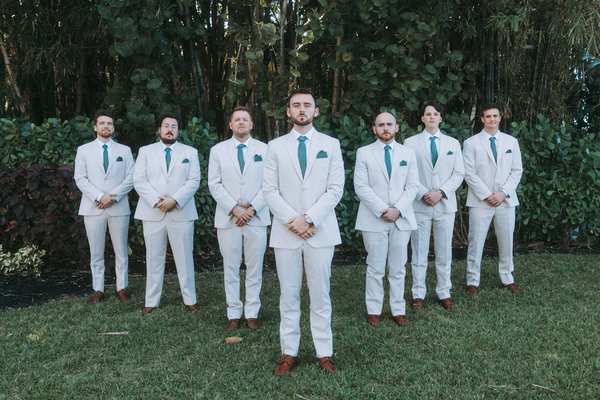
Coordinated groomsmen do not have to wear the same colour as the groom. One straightforward arrangement is a navy three-piece suit for the groom and mid-grey two-piece suits for the others, with the same muted blue accent carried through their ties. Another is to use the same navy cloth throughout, then distinguish the groom with a waistcoat or different tie.
Aim for a visible difference in one or two features, rather than changing everything. If the groom already has a patterned suit, plain groomsmen outfits usually frame it better than several competing checks.
Coordinate shirts, ties and shoes in that order
Once the suit colour is settled, choose shirts before neckwear. White is the simplest common denominator across most suit and tie combinations. Ivory can work beautifully with warmer stone and brown outfits, but compare it with the suit and wedding dress fabrics in daylight before committing.
Choose ties in the same colour family rather than relying on online photographs to deliver an exact shade. Small woven patterns can add interest, provided the overall colour reads consistently from a distance. Pocket squares can pick up a second palette shade; they need not be identical to the ties.
For footwear, black usually suits black and charcoal tailoring, while dark brown works with navy, blue-grey, brown and many green suits. Agree on shoe formality as well as colour: one pair of casual suede loafers can look noticeably different beside polished lace-ups.
Use the venue and season as a final colour test
Seasonal rules are useful prompts, not restrictions. Light grey and stone often suit brighter summer light; charcoal, navy and textured brown feel at home in cooler months. But a winter wedding in a bright modern venue may call for cleaner colours than an autumn barn, and a summer evening reception can support dark tailoring.
Ask for cloth swatches and photograph them together outdoors and inside the venue if possible. Warm artificial lighting can make beige and grey fabrics appear different, while direct sunlight may wash out pastel ties. This quick test often reveals clashing undertones before anyone pays for alterations.
A practical palette for a countryside wedding
Imagine a September wedding with sage bridesmaid dresses, cream roses and a timber-lined reception room. Rather than ordering sage suits, dress the groomsmen in navy with white shirts, muted green ties and cream buttonholes. Let the groom wear a deeper navy waistcoat and a patterned green tie. The wedding party colour palette appears in several places, yet each outfit remains wearable beyond the day.
If the suits are being hired from different branches or bought from different brands, agree on one named fabric or inspect samples side by side. Two garments sold as “navy” may differ considerably in brightness and texture. For more help with the overall look, explore wedding suit styles for grooms, seasonal wedding colour palettes and choosing groomsmen accessories.
Frequently asked questions
Should all groomsmen wear the same suit colour?
Not necessarily. Matching suits create the most uniform look, but different shades can work when the cut, formality and accessories are coordinated. Keep the variation intentional rather than allowing everyone to choose an unrelated navy or grey.
What colours go with navy groomsmen suits?
Sage, dusty blue, blush, champagne and burgundy can all complement navy. Select the accent according to the season and wider wedding palette, then compare physical samples where possible.
Can the groom wear a different suit colour?
Yes. A navy groom beside grey groomsmen, or a charcoal groom beside lighter grey suits, can look cohesive. Repeat one colour through ties or buttonholes so the outfits relate to each other.
How do we prevent mismatched suits in photographs?
Choose a shared cloth or supplier when possible, check swatches in natural light and agree on shirt colour, shoe style and accessory tones. Fit matters too: consistent tailoring often makes more difference than tiny shade variations.
Bringing the colours together
Good groomsmen suit colours work with the venue and wedding atmosphere rather than competing for attention. Choose a reliable base, add one restrained accent and let the groom have a clear point of difference. With swatches checked and details agreed early, the wedding party can look coordinated, comfortable and unmistakably part of the same celebration.