A winter wedding gives a groom more freedom to use richer fabrics, deeper colours and thoughtful layers. The key is to stay comfortable without letting the outfit become bulky or overly casual. A good winter groom outfit should still look formal in photographs, move easily through the day and cope with travelling between venues in cold UK weather.
Start with fabric, not just colour
Fabric choice has a bigger effect on winter comfort than simply choosing a dark suit. A wool wedding suit is usually the most versatile option because wool provides warmth while remaining breathable and structured. For a formal city wedding, smooth worsted wool keeps a sharp finish. For a countryside or rustic venue, flannel, brushed wool or a tweed wedding suit can introduce more texture and seasonal character.
Heavier does not automatically mean better. A very thick suit can become uncomfortable once you are inside a heated venue. Choose a cloth with enough substance to drape cleanly, then rely on removable outer layers for time spent outdoors.
Choose seasonal colours that still feel formal
Navy and charcoal remain dependable choices because they work in almost any venue and photograph well in low winter light. Mid- to dark-grey can feel modern, while deep brown, olive, burgundy or forest green can suit more relaxed seasonal settings. Black works best for deliberately formal styling, such as a black-tie or evening wedding.
If you want colour without committing to an unusual full suit, use it in the waistcoat, tie or pocket square. A charcoal suit with a muted burgundy tie, for example, feels winter-appropriate without becoming theme-heavy. The same idea works with groomsmen: keep the tailoring consistent and use one or two details to distinguish the groom.
Layer without adding unnecessary bulk
Layering is one of the strongest advantages of cold weather formalwear, but every layer should have a purpose. A waistcoat adds visual depth and gives the groom a polished look after the jacket comes off. For outdoor photographs or travel between locations, a tailored wool overcoat is far more elegant than a casual padded jacket over formal tailoring.
Avoid solving the cold with bulky clothing under the suit. Thick jumpers and oversized shirts can change the way the jacket sits across the chest and shoulders. If extra warmth is needed, a thin base layer that remains invisible at the collar and cuffs is more practical. Try the complete outfit together before the wedding rather than testing each item separately.
Pay close attention to fit and movement
Winter suits are often made from cloth with more body, so correct fit matters. The jacket should close without pulling, the collar should sit neatly against the shirt, and the shoulders should lie flat. Trousers need enough room for comfortable sitting, walking and dancing.
This matters especially with a tweed wedding suit or three-piece suit, where structured layers can quickly feel restrictive. At the final fitting, wear the same style of shirt, waistcoat and shoes planned for the day. Sit down, raise your arms and walk around. A suit that looks good only while standing still is not a successful wedding suit.
Build the shirt and accessories around the suit
A crisp white shirt is the safest choice for formal winter weddings, while soft ivory or pale blue can work with warmer palettes. Texture is useful in winter, but restraint keeps the outfit refined. A wool or knitted tie can complement textured tailoring, while silk provides contrast against flannel or tweed. If the suit already has a strong check or pronounced weave, simpler accessories normally look better.
Natural internal topics to connect from this article include groom suit colour combinations, how a wedding suit should fit, and choosing suits for groomsmen. Each gives readers a useful next step without interrupting the main advice.
Do not overlook winter footwear
Shoes need to match both the formality of the suit and the conditions outside. Polished black Oxfords suit highly formal navy, charcoal or black tailoring. Dark brown leather works especially well with navy, brown, green and many tweed combinations. For country venues, a refined leather boot can be practical if it is sleek enough to sit naturally beneath tailored trousers.
Check the forecast and venue surfaces before the wedding. Thin leather soles can be slippery on wet paving or awkward on gravel and grass. Weather-resistant soles can offer better grip while still looking formal. Whatever you choose, wear the shoes indoors before the day so stiffness or heel rubbing does not become a distraction.
Plan for the warmest and coldest parts of the day
A common mistake is dressing only for the outdoor temperature. UK winter weddings often involve short cold periods between long stretches in heated rooms. Build the outfit around the indoor event, then add outerwear for colder transitions.
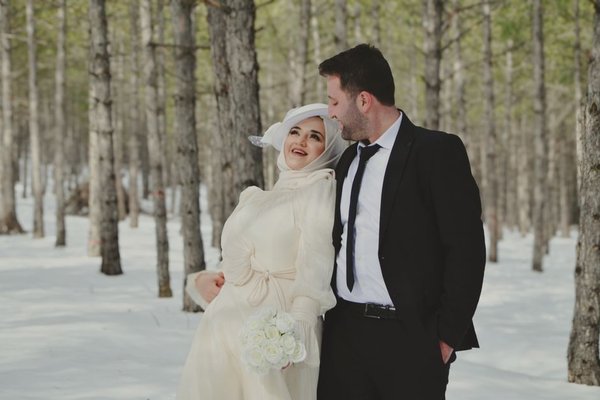
Imagine a December wedding with a church ceremony, photographs in the grounds and a hotel reception. A medium-weight navy wool suit with a waistcoat can remain comfortable indoors, while a knee-length wool overcoat and gloves handle the outdoor photographs. Once inside, the coat comes off and the outfit still looks like intentional formalwear rather than a collection of cold-weather layers.
Coordinate the groomsmen with restraint
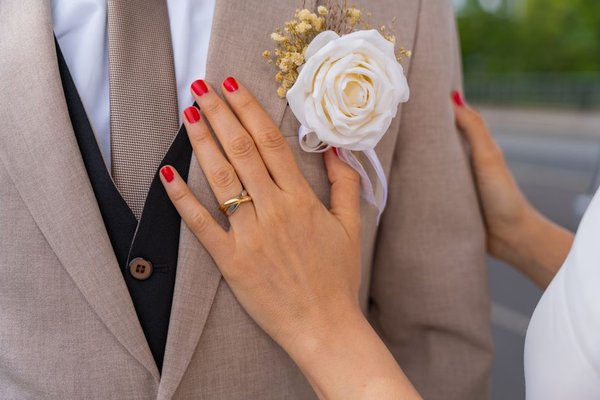
Matching suits create tidy group photographs, but the groom can still stand apart. He might wear the same suit with a different waistcoat, a richer tie or a distinctive boutonniere. Alternatively, groomsmen could wear charcoal while the groom wears deep navy in a similar fabric weight. Keep the shirt colour, shoe tone and overall level of formality consistent so the group still looks connected.
Frequently asked questions
What suit fabric is best for a winter wedding?
Wool is the most adaptable choice for most grooms because it combines structure, comfort and a formal appearance. Flannel and tweed add more texture and warmth, making them especially suitable for rustic, countryside or relaxed seasonal weddings.
Can a groom wear tweed to a formal winter wedding?
Yes, but the weave, cut and venue matter. Fine, well-tailored tweed can look smart, particularly for country-house weddings. For very formal city or evening ceremonies, smooth dark wool will usually create a sharper result.
Should a winter groom wear a three-piece suit?
A three-piece suit is a strong winter option, but it is not compulsory. A waistcoat adds visual interest and modest warmth, yet a well-cut two-piece wool suit can be equally appropriate when paired with good outerwear.
What should a groom wear over his suit in cold weather?
A tailored wool overcoat is the most versatile choice. It should be long enough to cover the suit jacket and roomy enough to sit over the shoulders without crushing them. Neutral dark shades such as navy, charcoal or black are easy to coordinate.
A polished winter look is about balance
The best winter wedding suits for grooms balance warmth, formality and flexibility. Start with a well-fitted wool or textured suit, use seasonal colour with restraint, choose layers that can be removed indoors and make footwear practical for the venue. When each element is selected as part of one complete outfit, the result feels appropriate for the season without sacrificing the clean, confident appearance a groom should have on the day.