Should you rent or buy a wedding suit? For most UK grooms, the answer comes down to what you will spend, how well the suit fits and whether you will wear it again. Hiring often makes sense for a one-off formal look. Buying becomes more appealing when the outfit suits your regular style or you want greater control over tailoring.
The cheapest price is not always the best value. Your suit needs to work through the ceremony, photographs, meal and dance floor, not just look impressive on a hanger.
Renting versus buying: the quick decision
Choose suit hire if you want a traditional morning suit, a statement colour or a coordinated wedding party outfit unlikely to be worn again. It can keep initial spending lower.
Consider buying if you regularly attend formal events, want a particular fabric or cut, or need alterations for a comfortable fit. Groom suit ownership offers value beyond the wedding only if you actually reuse the outfit.
Neither option automatically looks smarter. Fit, proportions and styling matter more than whether you own the garment.
Wedding suit cost: compare complete outfits
The wedding suit rental vs purchase comparison needs like-for-like quotations. As a UK reference point, Moss describes hire packages at around £80 to £180, while many of its ready-to-wear wedding suits are listed at roughly £199 to £399. These are examples from one retailer, not fixed UK-wide prices; check current quotes.
Ask precisely what is included. A hire quotation might cover jacket and trousers, or include a waistcoat, shirt and accessories. A purchased two-piece may require separate purchases. Shoes, delivery, fittings and optional damage cover can affect the total.
Look beyond the price tag
Hiring may involve courier fees, late-return charges and liability for lost or damaged items. Buying may involve hemming, sleeve adjustments, pressing and later cleaning. Hire providers have different rules on deposits, changes and cancellations, so read the agreement.
Our guide to wedding suit accessories can help you identify extras before comparing prices.
Fit could settle the question
With a purchased suit, a tailor may be able to refine trouser length, waist and sleeves, depending on its construction. That helps when standard jacket and trouser sizes rarely fit you equally well. Major structural alterations can still be expensive or impractical.
Hire suits rely more heavily on available sizes. Some businesses offer adjustments or size exchanges, while others prohibit alterations entirely. Confirm the policy before booking, especially if your shoulders, arms or waist are difficult to fit.
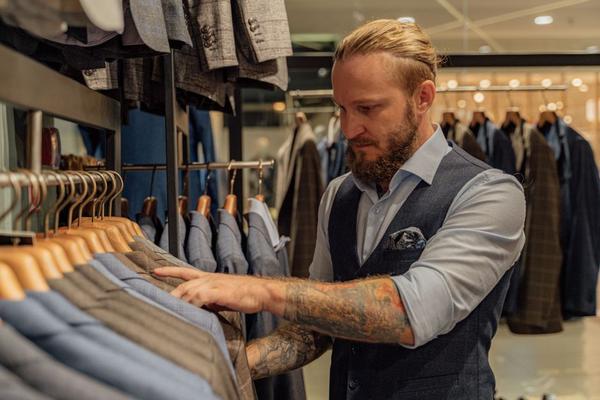
At your fitting, sit down, raise your arms and take a few steps. The jacket should close without pulling, the collar should sit neatly and the trousers should feel comfortable when seated. See how a groom’s suit should fit for a fuller fitting checklist.
Choice, personal style and future use
Hiring allows a distinctive look without committing to owning it. Morning coats, formal waistcoats and unusual colours can be perfect for the ceremony yet impractical afterwards. Hire collections may also simplify matching groomsmen.
Buying offers more freedom over fabric, cut and sometimes made-to-measure details. Keeping your wedding suit can be sentimental, too. Yet customisation is worthwhile only when it improves the outfit for you.
Look at your actual calendar over the next two or three years. A navy or charcoal lounge suit might work for future celebrations and interviews; a striking pastel three-piece might not. Future use should be realistic, not an excuse to justify a bigger bill.
A practical example: when the numbers reverse
Imagine a groom considering a £135 hire package with a £15 courier return, totalling £150. A purchased outfit costs £270 plus £45 for alterations, totalling £315. If he will never wear the style again, hiring leaves £165 for other wedding expenses.
Now imagine two further formal occasions. If he would otherwise hire a comparable £150 outfit each time, three hires could total £450, against £315 to buy before cleaning and other ownership costs. The purchased outfit works out at £105 per wear across those three outings.
This calculation is illustrative, not a market quotation or guaranteed saving. If the later occasions call for a different outfit, the apparent cost-per-wear advantage disappears.
Convenience depends on your plans
Hiring avoids long-term storage but creates a return deadline. That matters if you leave for your honeymoon the next morning or marry far from home. Arrange who will empty the pockets, gather the pieces and return everything.
Buying avoids that handover and allows more time for alterations. However, finding the right size and booking a tailor can require several visits. Start early enough to resolve stock or fit problems either way.
Should the groom and groomsmen choose alike?
Not necessarily. The groom could buy a distinctive suit while the groomsmen hire complementary outfits. Shared colours, ties or waistcoats can create a coordinated look without requiring identical purchases.
For a wedding party spread across the UK, check whether fittings and returns can happen at different branches. Our guide to coordinating groomsmen suits offers ideas for keeping outfits consistent.
Make your decision with two real quotations
Get one complete hire quote and one complete purchase quote for outfits you would genuinely enjoy wearing. Compare the same pieces, check alteration and return rules, and count only the future occasions for which you would confidently reuse the suit.
Finally, try both options on. A cheaper outfit that restricts movement or feels unlike you is no bargain. Comfort during the vows and reception deserves a place beside cost.
Frequently asked questions
Is it cheaper to hire or buy a wedding suit in the UK?
Hiring is usually cheaper for a single use, especially for specialist formalwear. Buying may offer better value across several wears. Compare full packages, alterations, accessories and return fees rather than jacket prices alone.
Can you alter a rented wedding suit?
Policies vary. Some providers allow limited adjustments or exchanges; others prohibit alterations. Ask before booking, and never arrange independent tailoring on hired garments without permission.
How early should a groom arrange his suit?
Begin looking several months ahead, particularly for popular summer dates or group hire. Leave time for fittings, potential size changes and alterations. Deadlines depend on the retailer and outfit.
Is buying worthwhile if I rarely wear suits?
Only if you value keeping the outfit or can identify realistic future uses. If the wedding calls for a style you would never choose again, hiring may be more practical.
Choose the suit that fits your life
The suit hire vs buy decision is about your wedding, your body and your wardrobe. Rent for a special look you will wear once. Buy when tailoring, personal choice and genuine repeat use justify the higher upfront wedding suit cost. Either way, aim for an outfit that lets you enjoy the day rather than worry about what you are wearing.