A wedding ceremony can sound beautiful on paper and still feel unlike the two people standing at the front. That is why a celebrant wedding ceremony script works best as a shared conversation, not a speech assembled from borrowed quotations. Your celebrant brings structure; you bring the memories, promises and details that make the words unmistakably yours.
You do not need to write every sentence yourself. Agree what the ceremony should feel like, then build a sequence that carries guests from a warm welcome to a meaningful final moment.
Start with the atmosphere, not the opening line
Before drafting, each of you should choose three words for the mood: perhaps relaxed, heartfelt and playful, or intimate, reflective and joyful. Compare your choices with your celebrant. These words become an editing test. A long formal passage probably does not belong in a ceremony you want to feel easy-going.
Agree on what is private, too. You might happily share the story of your disastrous first date but prefer to keep a difficult family chapter out of the spotlight. A personalised ceremony script should feel honest without revealing information you would rather protect.
Build your ceremony in a natural order
The following sequence gives your celebrant a practical framework. It is flexible: move a reading, invite family participation or leave out elements that hold no meaning for you.
1. Welcome guests and set the scene
The opening should thank everyone for coming and establish why the gathering matters. Rather than defining marriage, the celebrant might say: “We are here for Maya and Ellis, whose favourite place to be has always been wherever the other one is.” One truthful detail does more work than generic romance.
2. Tell your story with a purpose
A good couple’s story is not a complete timeline. Choose two or three moments that reveal how your relationship works: a first impression, a turning point and an everyday habit. Ask your celebrant to connect these moments rather than recite a biography.
For example, a couple who met while volunteering could move from their first awkward conversation to the quiet teamwork they rely on today. The point is not where they met; it is that they learned to show up for each other.
3. Place readings and music where they belong
Readings create a change of pace, especially after a lively story and before emotional vows. Choose a piece because its meaning fits your relationship, not merely because it is popular. Introduce the reader by name and give them a printed copy with clear cues.
Music can mark an entrance, reflection or exit. Confirm whether lyrics, live instruments or a recording suit the setting and whether the venue has restrictions.
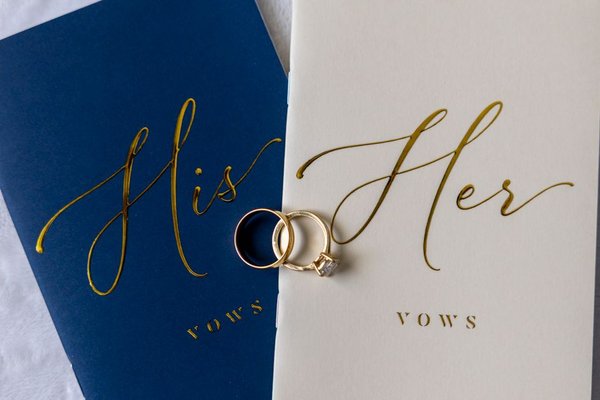
4. Make vows the emotional centre
Your vows are often the part guests remember most. They need not match word for word, but should feel balanced in length and tone. A useful pattern is to name something you value, make two or three specific promises, then look towards your future.
“I promise to make time for us, even when our calendars look impossible” often sounds more natural than a pledge to be perfect. If either partner dislikes speaking at length, your celebrant can offer repeat-after-me vows or questions you answer together.
5. Give the rings and closing a clear meaning
Ring exchange wording can be simple: “I give you this ring as a reminder that I choose you, today and in the years ahead.” Confirm who carries the rings, when they are handed over and whether each person repeats a line. Small logistical decisions make a large difference.
The closing should move from promises to celebration. Your celebrant might offer a final wish, invite a kiss if you want one, and introduce you as a married couple or newlyweds only when appropriate to your legal circumstances.
See how the pieces fit together
Imagine a couple planning a twenty-five-minute garden ceremony. Their celebrant welcomes guests, tells a carefully chosen four-minute story, introduces a friend’s reading, then pauses before the vows. They exchange rings, share a short closing reflection and walk out to a song they love. The emotional rhythm matters more than squeezing in every tradition.
Write stage directions separately in the celebrant’s working copy: “Reader walks to microphone”; “pause for rings”; “music begins after final sentence”. These are production notes, not words to read aloud. They stop an elegant script becoming confusing.
Shape celebrant ceremony wording around your voices
Read every sentence aloud together. If you would never call each other “my beloved companion”, ask for something plainer. Humour should come from recognisable truths rather than jokes at one partner’s expense. Avoid stories that require lengthy explanations before guests understand them.
One useful exercise is to finish the sentence, “The thing people should understand about us is…” separately, then share your answers with the celebrant. This often uncovers the ceremony’s central theme: curiosity, resilience, friendship or building a home together.
When searching for wedding celebrant ideas, treat examples as prompts rather than scripts to copy. You can also explore wedding ceremony readings, writing personal wedding vows and a wedding ceremony order checklist to develop sections without losing your shared voice.
Rehearse the transitions and check the legal details
Ask your celebrant for a read-through covering names, entrances, microphone handovers and pauses. Time it at a natural speaking pace, allowing for laughter and tears. Check pronunciation, accessibility and any outdoor backup plan. Make sure your photographer and musicians know the key cues.
Confirm what makes your marriage legally valid where you are marrying. An independent celebrant-led celebration is not automatically a legal marriage ceremony. Requirements differ by location and the celebrant’s authorisation; some couples complete legal formalities separately. Do not assume a symbolic declaration or ring exchange fulfils the requirements.
Frequently asked questions
Who normally writes a celebrant wedding ceremony script?
Usually the celebrant drafts the ceremony using conversations, questionnaires and stories supplied by the couple. You should be able to review the wording, correct details and agree on what will be shared publicly.
How long should the ceremony script be?
There is no required length. Many couples plan roughly twenty to thirty minutes, but readings, rituals, music and speaking pace change the timing. Rehearsing aloud is more reliable than judging by page count.
Can we include religious elements or family traditions?
Often, yes, depending on your celebrant, setting and the kind of ceremony you are arranging. Discuss prayers, cultural rituals or contributions early so they fit respectfully into the order of service.
Should our vows be a surprise?
They can be, but agree on approximate length and tone. Your celebrant can check both sets for balance without revealing the words. That keeps the moment personal while avoiding one partner delivering a paragraph and the other a five-minute speech.
A ceremony that sounds like you
The strongest script is not the most elaborate one. It has a clear beginning, a story worth sharing, promises that mean something and a closing that lets everyone celebrate with you. Work with your celebrant, keep the words comfortable to speak and leave room for genuine emotion. That is how a well-planned ceremony becomes a moment you recognise as your own.