A wedding unity ritual turns a promise into something you can see: two hands tied together, a flame shared, or separate colours of sand finding their place in one vessel. The best unity ceremony ideas are not necessarily elaborate. They make part of your relationship visible, whether that means welcoming children, honouring family, or recognising the choice to build a life together.
There is no rule that a wedding must include a unity ritual. When the gesture means something to you, though, it can create a memorable pause between spoken promises and the celebrations that follow.
Start with the meaning, not the prop
Before choosing ribbons, candles or jars, decide what you want the moment to express. Is it the joining of two people, the creation of a new family, gratitude towards those who supported you, or a promise to keep growing together? Different symbolic wedding rituals tell different stories.
Consider how you want the moment to feel, too. A private elopement calls for something different from a guest-centred celebration. Most rituals work best when the celebrant explains their meaning briefly and the action remains simple.
Classic unity ceremony ideas with room for personality
Handfasting: a promise made with joined hands
During handfasting, a celebrant places cords or ribbons around the couple’s joined hands, often while reading promises. The binding represents commitment rather than an actual restraint. The couple can then keep the cord as a memento.
Choose fabric with personal meaning: a ribbon in a family tartan, colours drawn from your wedding flowers, or material saved from a treasured garment. Decide whether you want one loop or a more intricate knot. Practise with your celebrant so the cord can be removed comfortably. For additional wording and variations, see our handfasting ceremony guide.
Ring warming: inviting loved ones into the promise
A ring warming ceremony allows selected relatives or guests to hold the wedding rings briefly and offer a silent wish before the exchange. It makes the commitment feel supported by a wider circle without requiring anyone to speak publicly.
At a small gathering, the rings might move carefully along the front row. At a larger wedding, passing them around every guest can take too long. Invite two or three people to warm them before the service instead. Keep the rings in a secure pouch and assign someone to return them to the officiant. See our ring warming ceremony ideas for further ways to involve guests.
Unity candles: two lights and one shared flame
In a unity candle ritual, each partner uses a separate candle to light a central one. Some couples ask parents or other significant people to light the original candles, symbolising the care that brought them to this moment.
The image works well indoors. Check the venue’s flame policy, keep loose clothing and decorations away from the candles, and use a stable, heat-safe surface. Outdoor breezes can make flames unreliable; battery-operated candles may be a practical substitute where suitable. A unity candle ceremony guide can help with the wording and order.
Sand blending: a shared keepsake
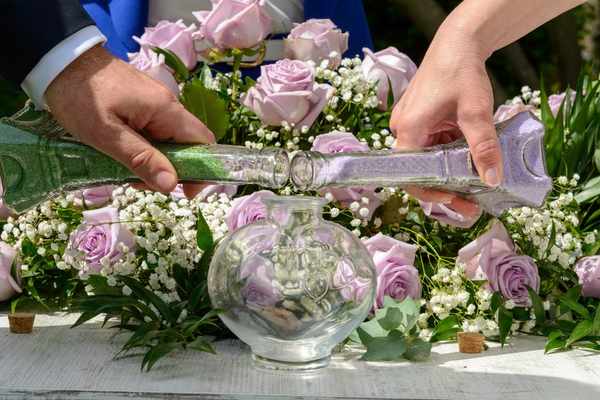
Each partner pours differently coloured sand into one clear container, creating layers that remain distinct yet share the same space. Children can add their own colours, making this one of the most accessible unity ritual ideas for a blended family.
Choose a stable vessel, rehearse the pouring angle and keep a funnel nearby for narrow openings. If the piece must travel, secure its lid and pack it to minimise shifting. Rather than insisting the colours disappear into one another, describe the result as different identities belonging together.
Alternative ceremony rituals beyond the familiar
Plant something you can care for
Partners can add soil to a potted tree or shrub, then water it together. The gesture speaks to patience and ongoing care rather than one perfect moment. Choose a plant suited to your climate and a pot you can carry easily. Planting it permanently can happen at home after the wedding.
Seal letters for your future selves
Write private letters about what you admire in each other and the life you hope to make. During the ceremony, place them in a box to open on an agreed anniversary. Add a photograph or memento from your early relationship if you like. This suits couples who appreciate a meaningful keepsake more than a public performance.
Create something together
Layer paint onto a small canvas, place stones from meaningful places into a shared bowl, or combine two favourite teas in a labelled jar. The gesture should be easy to explain and transport. A couple who met while hiking, for example, might contribute stones from separate favourite routes and keep the bowl by their front door.
Make the ritual fit your people and setting
Family participation is optional. Children may enjoy pouring sand or handing over a cord, but should not be pressured to make promises they do not understand. A brief introduction can acknowledge a loved one who has died without turning the ceremony into a memorial. If borrowing a culturally or religiously specific practice, learn its context and discuss appropriate participation with someone knowledgeable.
Think through logistics as well. Who brings the objects forward? Who speaks? Where will the keepsake go afterwards? Give your celebrant a written sequence and assign someone to manage the props.
How to choose a ritual that actually works
Imagine an outdoor wedding with forty guests, two young children and a breezy terrace. A candle may be frustrating, while sand lets everyone contribute. Set a small table at child height, give each child a manageable container and let the adults finish the pour. Rehearse once and have someone carry the finished vessel indoors.
A quiet indoor ceremony might call for handfasting with fabric from two family keepsakes instead. Neither version is more meaningful. Match the ritual to your people, your venue and the story you genuinely want to tell.
Frequently asked questions
When does a unity ceremony happen?
Many couples include it after the vows or ring exchange, before the final pronouncement, although the order can vary. Ask your celebrant to place it where the transition feels natural.
Do we need a unity ritual to be legally married?
No. Unity rituals are symbolic additions, not substitutes for the legal requirements of marriage. Those requirements depend on where and how you marry, so confirm them with the relevant authority or officiant.
Can we combine two unity ceremony ideas?
Yes, but several full rituals can interrupt the flow. If you want both family involvement and a couple-focused moment, relatives could warm the rings before the service while you keep one main ritual during it.
Can a unity ceremony be completely original?
Absolutely. An original gesture can be as simple as placing two handwritten promises in one envelope. Give guests enough context to understand its meaning, and choose an action you can complete comfortably in wedding clothes.
Choose a gesture worth remembering
The most personal unity ceremony ideas start with a shared value, not a shopping list. A cord, candle, handful of sand or pair of letters can all express commitment when the meaning is genuine. Keep the action manageable, explain it in your own words, and let the moment feel like yours.