Writing your wedding vows can feel strangely harder than saying “I love you” in everyday life. You know the person, you know the feelings, and yet a blank page suddenly makes everything sound either too ordinary or too dramatic. The solution is not to find the most beautiful line someone else has written. It is to notice what is true about your relationship and turn that truth into a promise.
If you are wondering how to write wedding vows that sound like you, start with the moments and habits that would make your partner recognize your voice immediately. You do not need to be a poet, make everyone cry, or tell your entire love story. You need a few honest details, meaningful commitments, and words you can comfortably say aloud.
Start With Your Relationship, Not a Perfect Opening Line
Before drafting a single sentence, spend ten minutes collecting raw material. Open a notes app or take a sheet of paper and answer these questions without editing yourself: When did your partner make a difficult day easier? What small habit of theirs would you miss? What have you learned from loving them? When did you feel especially proud to be on their team?
Look for ordinary, specific answers. “They are supportive” is a useful starting point, but “They waited outside my late-night class every Thursday with a snack” gives you something real to work with. Details make personal wedding vows recognizable without making them overly private.
Separate What You Admire From What You Promise
A wedding vow is more than a list of your partner’s best qualities. Admiration explains why this person matters to you; promises explain how you intend to show up in your marriage. Both belong, but the promises should carry the weight.
Imagine you have written, “You always listen when I am overwhelmed.” Ask what that quality inspires you to do in return. You might promise, “I will listen before trying to solve everything.” That change turns a compliment into a commitment your partner can recognize in everyday life.
Choose promises that are specific enough to mean something and flexible enough to survive changing circumstances. You cannot promise that life will always be easy or that you will never disagree. You can promise to treat disagreements with respect, make room for each other’s ambitions, and keep choosing kindness when you are tired.
Use a Simple Wedding Vow Structure
You do not need an elaborate formula. A clear wedding vow structure gives your thoughts a beginning, a middle, and an ending while leaving room for your personality.
Open by Speaking Directly to Your Partner
Say their name and begin with something you genuinely believe. It could be what you appreciate about life together or how your understanding of love has changed. Skip grand claims if they are not how you usually speak. A quiet opening can be just as moving as a dramatic one.
Share One Detail and Explain Why It Matters
Pick a moment from your notes, then connect it to the bigger truth. Rather than retelling every stage of your relationship, describe one scene that shows your partner’s character or the way you work together. Give guests enough context to understand it, but keep the focus on your partner.
Make Two or Three Promises You Mean
Begin sentences with “I promise,” “I will,” or another phrase that feels natural. Vary the commitments: practical, emotional, and hopeful. Avoid stacking so many promises together that none has time to land. Leave space between the most important lines when you read them.
End With a Clear Choice
Tell your partner what you are choosing today and intend to keep choosing in the future. A sincere ending is enough.
Turn an Everyday Memory Into an Original Vow
Consider a couple who spent a stressful winter renovating their first home. One partner always made tea and sat on the kitchen floor with the other after another project went wrong. The raw memory might be, “We sat in a half-finished kitchen drinking tea.” On its own, that is a charming detail but not yet a vow.
Connect the detail to its meaning: “In that unfinished kitchen, you made an exhausting day feel like somewhere I belonged.” Then add a commitment: “I promise to make space for us to pause, laugh, and find our way through the messy parts together.”
Keep Your Natural Tone, Even When You Are Nervous
Read each sentence and ask, “Would I actually say this to my partner?” If not, replace formal expressions with familiar language. “You are my unwavering beacon” might become “You help me feel steady when everything else gets loud.” The second line often says more because it sounds lived-in.
Edit for the Ear, Not Just the Page
Among the most useful vow writing tips is to practice out loud. Start by reading at a comfortable pace, with pauses. Many couples aim for roughly one to three minutes each, but there is no universal rule. Time your own delivery rather than relying only on a word count.
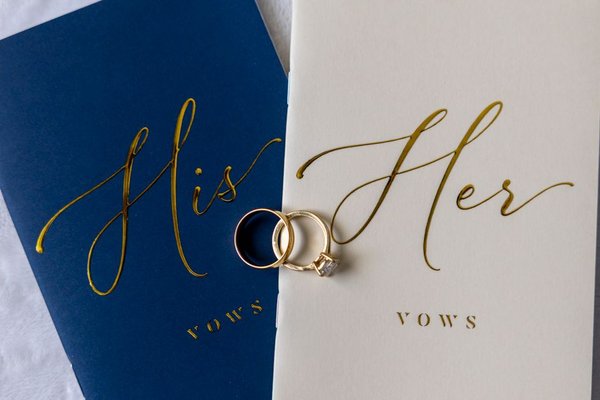
Print your final version in an easy-to-read font or place it in a vow book. Mark natural pauses, keep a backup copy, and practice looking up occasionally. If you become emotional, stopping for a moment is fine. You are speaking to one person, not performing a flawless recital.
Before finalizing, ask your officiant whether your ceremony has required traditional or religious wording and how personal vows fit into the wedding ceremony order. That small check keeps the writing process connected to the actual service. If you are also choosing ceremony readings, consider how their tone complements your promises without repeating them.
Frequently Asked Questions
How do I start writing wedding vows if I am stuck?
Forget the opening line and write three brief memories first. Add what each moment taught you about your partner. Choose the most meaningful one and build a promise from it. Write the introduction last if that feels easier.
How many promises should personal wedding vows include?
Two or three well-chosen promises often feel stronger than a long list. Include commitments you can act on throughout married life, not just romantic statements that sound good at the ceremony.
Should wedding vows be funny or serious?
They can be both. Let your usual relationship dynamic guide the tone, and make sure humor supports the affection rather than distracting from it. Avoid jokes that require private context or make your partner uncomfortable.
Is it okay to read wedding vows instead of memorizing them?
Absolutely. Reading from a card or vow book can help you remain present and confident. Practice enough to know where your pauses belong, but do not put pressure on yourself to memorize every word.
The Words That Matter Most Are Yours
Good wedding vows do not need to sound timeless to everyone in the room. They need to sound truthful to the person standing in front of you. Start with a moment, explain what it reveals, and make promises that belong to the life you are building together. When your words feel familiar enough that your partner can hear you in them, you have written something worth keeping.